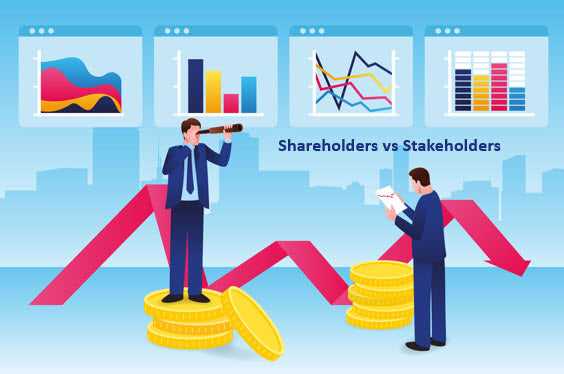
Stakeholder vs. shareholder decisions represent two different philosophies about how organizations should define success and responsibility. Major totosites Shareholder-focused decisions prioritize maximizing financial returns for owners or investors, often emphasizing profitability, stock price, and short-term performance. Stakeholder-focused decisions, on the other hand, consider the broader group affected by business actions—employees, customers, suppliers, communities, and the environment. The tension between these approaches shapes corporate strategy, governance, and leadership behavior.
The shareholder model gained prominence in the late twentieth century, influenced by economists like Milton Friedman, who argued that a company's primary responsibility is to increase profits within the bounds of the law. Under this perspective, executives are agents of shareholders, and decisions should align with maximizing investor value. This often leads to cost-cutting, efficiency improvements, and capital allocation strategies designed to boost financial returns. The logic is straightforward: when shareholders benefit, capital markets function efficiently, encouraging economic growth.
Stakeholder-oriented decision-making expands the scope of responsibility. Leaders adopting this approach evaluate how their choices affect multiple groups, not just investors. For example, a company considering relocating manufacturing might weigh financial savings against employee job losses, community impact, and supply chain stability. This broader lens emphasizes long-term sustainability and recognizes that business success depends on healthy relationships with many stakeholders.
One key difference between the two models lies in time horizon. Shareholder decisions often focus on short-term metrics like quarterly earnings, while stakeholder decisions typically prioritize long-term resilience. Investing in employee training, environmental sustainability, or customer trust may reduce immediate profits but strengthen the organization's future competitiveness. In this sense, stakeholder thinking often aligns with risk management and reputation building.
Another distinction is how trade-offs are handled. Shareholder-focused decisions tend to resolve conflicts by asking, “What increases shareholder value?” Stakeholder-based decisions ask, “How can we balance competing interests?” This can make decision-making more complex, requiring dialogue, negotiation, and ethical consideration. Leaders must weigh social responsibility alongside financial performance, which may lead to slower but more inclusive outcomes.
Critics of the shareholder model argue that it can encourage harmful practices, such as underinvestment in employees or environmental neglect, when those actions boost profits. Conversely, critics of stakeholder models claim they may dilute accountability, since managers can justify almost any decision by appealing to different stakeholder interests. This debate reflects a deeper question: should corporations serve primarily economic goals or broader societal purposes?
In practice, many modern organizations blend both approaches. They aim to deliver strong returns to shareholders while also considering stakeholder impact. Concepts like corporate social responsibility and ESG (environmental, social, and governance) metrics attempt to formalize this balance. Companies increasingly recognize that ignoring stakeholders can ultimately harm shareholders through reputational damage, regulatory risks, or reduced customer loyalty.
Ultimately, stakeholder vs. shareholder decisions are not mutually exclusive but represent a spectrum. Effective leadership often involves integrating financial discipline with social awareness. By acknowledging that long-term value creation depends on multiple relationships, organizations can pursue strategies that benefit investors while supporting employees, customers, and communities. The challenge lies in navigating these trade-offs thoughtfully and transparently.

Bình luận